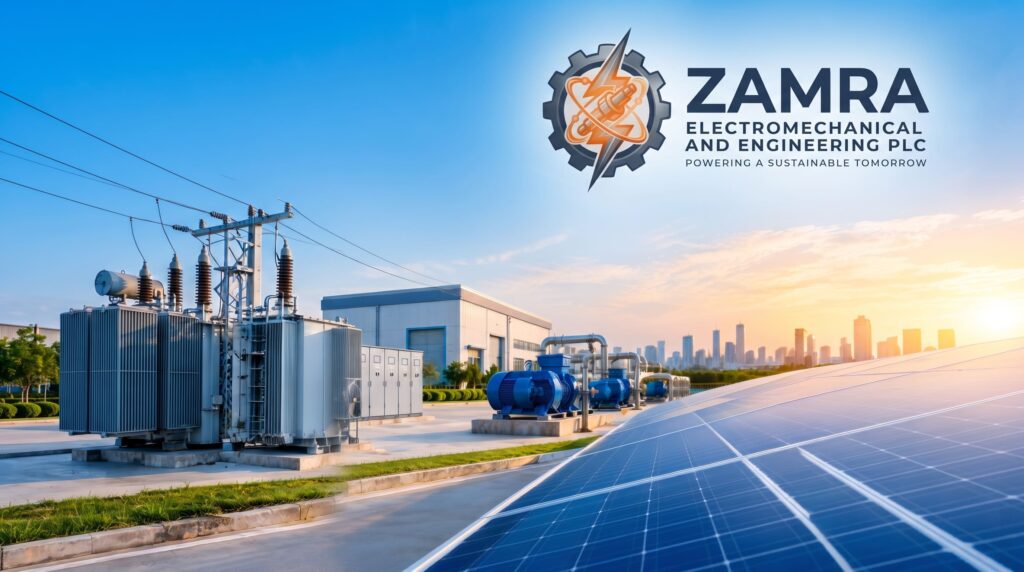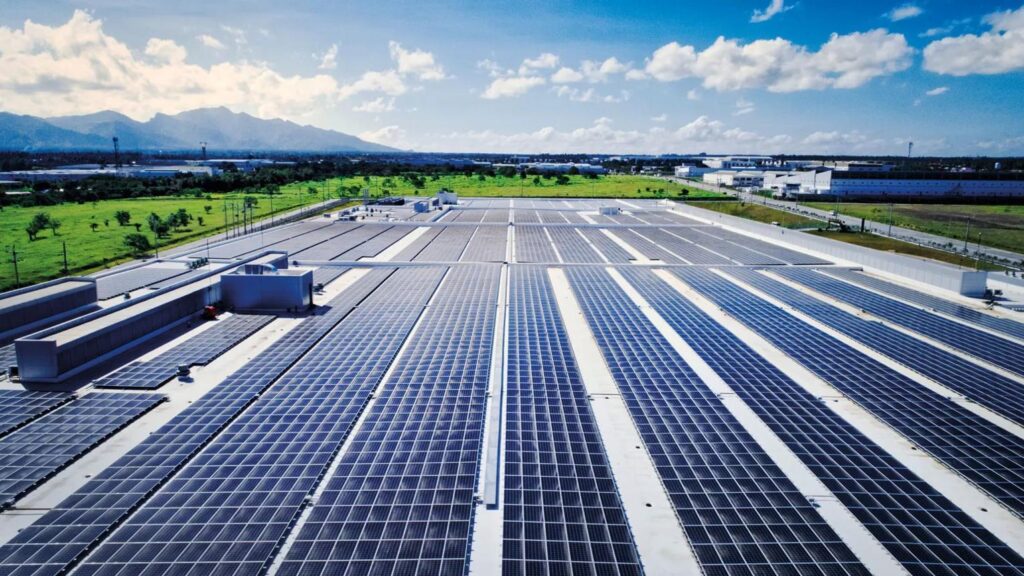
Commercial buildings, manufacturing facilities, agricultural operations, workshops, and infrastructure projects depend on electrical equipment to distribute power, operate machinery, and support day-to-day activities.
Choosing the right equipment is an important part of designing a reliable electrical system. Transformers, distribution panels, variable frequency drives, industrial water pumps, and three-phase electric motors each perform different functions. Their specifications must match the requirements of the installation and the equipment they serve.
For organizations sourcing electrical equipment in Ethiopia, understanding the role of each component can make it easier to prepare specifications, compare quotations, and identify products suitable for the intended application.
Zamra Electromechanical PLC focuses on electrical equipment supply and electromechanical applications, including transformers, distribution panels, variable frequency drives, industrial water pumps, and three-phase electric motors.
This guide explains the basic functions of these products and the factors buyers should consider before making a purchasing decision.
1. Electrical Power Transformers
Electrical transformers transfer electrical energy between circuits through electromagnetic induction. They are commonly used to change voltage levels in power distribution systems.
Depending on the application, a transformer may step voltage up or down to support the requirements of a distribution network, industrial facility, commercial building, or other electrical installation.
Common applications
Transformers may be used in:
- Commercial and industrial power distribution.
- Manufacturing facilities and workshops.
- Infrastructure and utility-related installations.
- Electrical substations and distribution arrangements.
- Facilities that require a particular voltage level for their equipment.
The suitability of a transformer depends on the electrical system and the loads it must serve.
What should buyers consider?
Rated capacity: Transformer capacity is commonly expressed in kilovolt-amperes (kVA). The selected rating should account for expected loads, load diversity, starting characteristics, and reasonable future requirements.
Primary and secondary voltage: The transformer must match the supply and the voltage required by the downstream electrical system.
Phase configuration: Single-phase and three-phase arrangements serve different applications. The selected configuration must match the installation.
Frequency: The transformer must be suitable for the system frequency.
Cooling and installation environment: Cooling method, ventilation, ambient conditions, and installation location affect suitability.
Protection and safety: The installation may require appropriate switching, overcurrent protection, grounding, clearances, and other measures based on the system design and applicable requirements.
Efficiency and losses: No-load and load losses affect energy consumption over the transformer’s operating life.
Before purchasing a transformer, buyers should establish the actual load requirements and confirm the relevant technical specifications with the project designer or supplier.
2. Electrical Distribution Panels
Electrical distribution panels organize and distribute power to different circuits within a building or facility. Depending on the design, they may contain circuit breakers, switching devices, busbars, protective equipment, metering, and control components.
A well-designed distribution arrangement helps separate circuits, manage electrical loads, and provide appropriate protection against defined electrical faults.
Where are distribution panels used?
Distribution panels are found in commercial buildings, offices, workshops, industrial facilities, and other installations requiring organized electrical distribution.
The panel configuration depends on the supply arrangement, number of circuits, load requirements, protection strategy, and operating environment.
What should buyers consider?
Current rating: The panel and its components must be suitable for the expected operating current.
Voltage and phase: The configuration should match the electrical supply and the circuits being served.
Short-circuit rating: Equipment must be capable of withstanding or interrupting the prospective fault current as required by the design.
Circuit protection: Breakers and other protective devices should be selected and coordinated according to the circuit and installation requirements.
Enclosure and environment: Indoor and outdoor installations may require different enclosure properties. Dust, moisture, temperature, and access conditions should be assessed.
Space for maintenance and expansion: Adequate working space and practical component arrangement can support safe maintenance and future modifications.
Labelling and documentation: Clear circuit identification and accurate documentation make troubleshooting and maintenance easier.
Distribution panels should be designed, assembled, installed, and inspected in accordance with the relevant technical requirements. Buyers should not assume that panels with similar external appearances have the same electrical ratings or protection capabilities.
3. Variable Frequency Drives (VFDs)
A variable frequency drive controls the speed of a compatible electric motor by adjusting the frequency and voltage supplied to it. VFDs are commonly used in applications where motor speed needs to change according to process requirements.
By matching motor speed to the required output, a properly selected drive may improve process control and can reduce energy consumption in certain variable-torque applications, such as some fan and pump systems.
However, savings are not guaranteed. They depend on the load profile, system design, control strategy, and operating conditions.
Common applications
VFDs may be used for:
- Pumping and water supply systems.
- Fans and ventilation equipment.
- Conveyors and material-handling systems.
- Industrial machinery.
- Process equipment requiring adjustable motor speed.
The drive must be compatible with the motor and the application.
What should buyers consider?
Motor rating: The drive should be selected based on motor current, power, overload requirements, and the intended duty.
Supply voltage and phase: The input supply must be compatible with the drive, and its output must suit the motor.
Control requirements: Some applications need simple speed adjustment, while others require feedback, automated control, or integration with a larger control system.
Starting and stopping requirements: The selected drive must accommodate the load’s acceleration, deceleration, and operating profile.
Environmental conditions: Temperature, dust, moisture, ventilation, and enclosure requirements can affect drive selection and installation.
Motor cable and electrical compatibility: Cable length, motor insulation, electromagnetic interference, and other installation considerations may need to be assessed.
Protection and commissioning: Parameters must be configured for the actual motor and load. Incorrect settings can lead to faults or unsuitable operation.
Before choosing a VFD, confirm the motor nameplate information and the application’s control requirements. Selecting a drive solely by kilowatt rating can result in an unsuitable match.
4. Industrial Water Pumps
Industrial water pumps move water or other compatible fluids between locations. Their uses range from water supply and transfer to irrigation, circulation, and industrial processes.
Pump selection should be based on the required flow rate and total dynamic head, rather than on a general description such as “high capacity.”
Understanding flow rate and head
Flow rate describes the volume of fluid moved over a given period. It may be expressed in litres per minute or cubic metres per hour.
Head describes the energy the pump provides to move the fluid, commonly expressed in metres. Total dynamic head accounts for vertical elevation, pressure requirements, and friction losses through the pipework and fittings.
A pump’s delivered flow changes with the system head. The pump performance curve should therefore be evaluated against the actual operating conditions.
What should buyers consider?
Required flow rate: Determine the volume of water required and the time available to deliver it.
Total dynamic head: Include elevation, pumping water level, pipe friction, valves, filters, and required delivery pressure.
Fluid characteristics: Water quality, temperature, solids, and chemical properties can influence material and pump selection.
Pump type: Surface, submersible, centrifugal, and other pump designs serve different operating conditions.
Motor and power supply: Voltage, phase, frequency, motor rating, and starting requirements must match the installation.
Operating schedule: Continuous operation and intermittent duty can impose different requirements.
Maintenance and spare parts: Consider accessibility, expected service requirements, and availability of compatible replacement components.
For solar irrigation applications, pump selection must also be coordinated with the solar array and controller. A pump that performs well on one power source may require a different configuration when supplied by a solar system.
5. Three-Phase Electric Motors
Three-phase electric motors convert electrical energy into mechanical motion. They are widely used in industrial machinery, pumps, fans, compressors, and other equipment designed for three-phase power.
The correct motor must match the driven equipment and the electrical supply. A motor’s nominal power rating alone does not establish whether it is suitable for the application.
What should buyers consider?
Rated power and current: The motor must provide the required mechanical output while operating within its electrical limits.
Voltage and frequency: The nameplate ratings must be compatible with the supply and any control equipment.
Speed: Motor speed depends on its design, supply frequency, and load. The driven equipment must operate at a suitable speed.
Torque requirements: Some applications require high starting torque or sustained torque under demanding conditions.
Duty cycle: Continuous operation and intermittent operation can require different motor characteristics.
Efficiency: Motor efficiency affects the electrical energy required to produce mechanical output.
Enclosure and protection: The motor must be suitable for the installation environment, including exposure to dust, moisture, and temperature.
Mounting and mechanical compatibility: Shaft dimensions, mounting arrangement, and coupling must suit the driven machine.
Control method: Where variable-speed operation is required, the motor’s compatibility with the selected VFD should be verified.
Correct motor selection helps support reliable operation and reduces the risk of problems caused by unsuitable electrical or mechanical specifications.
6. How These Products Work Together
Electrical equipment should be viewed as part of an integrated system.
For example, an industrial facility may receive electrical power through a transformer, distribute that power through suitable panels, and use protective devices to manage individual circuits. A VFD may control a motor connected to a pump, while the pump delivers water to a process or storage tank.
A solar-powered pumping installation may include photovoltaic panels, a compatible controller or drive, a pump motor, electrical protection, and water distribution components.
Each item has its own function, but the system can operate effectively only when the components are compatible and correctly installed.
This means buyers should consider more than the specifications of an individual product. They should also confirm its relationship to the power supply, protection devices, connected loads, installation environment, and overall control strategy.
7. How to Prepare an Equipment Enquiry
A clear equipment enquiry helps suppliers understand the required application and identify relevant options.
Where possible, include the following information:
- Product type: Transformer, distribution panel, VFD, pump, or motor.
- Quantity: Number of units required.
- Electrical specifications: Voltage, phase, frequency, current, and power ratings where relevant.
- Application: Describe the equipment or process the product will serve.
- Operating conditions: Indoor or outdoor installation, ambient conditions, and expected operating hours.
- Performance requirements: Required pump flow and head, motor speed, control functions, or transformer capacity, as applicable.
- Existing equipment details: Nameplate information, drawings, photographs, or model references where available.
- Project location and timeline: Include the delivery location and expected purchasing schedule.
Not every enquiry will require every detail. However, providing accurate information reduces uncertainty and can make product comparisons more meaningful.
Where a specification is incomplete, a qualified technical professional should help establish the missing requirements before equipment is selected.
8. Compare More Than the Purchase Price
Price is an important purchasing consideration, but it should not be the only one.
Buyers should compare the technical specifications, suitability for the intended application, equipment documentation, warranty conditions, maintenance requirements, and compatibility with the existing system.
For equipment that operates for long periods, energy efficiency and operating costs can be significant over its service life. Installation complexity, spare-part availability, and the consequences of downtime may also affect the overall value of a purchase.
When reviewing quotations, ensure that the products being compared have equivalent ratings and required accessories. A lower-priced item may not include the same protection devices, controls, installation materials, or technical features as another option.
The most suitable choice is the one that meets the project’s verified requirements and offers an appropriate balance of cost, performance, and maintainability.
Electrical Equipment Supply From Zamra Electromechanical PLC
Zamra Electromechanical PLC focuses on electrical equipment and electromechanical applications for commercial, industrial, agricultural, and infrastructure-related needs.
Its product categories include electrical power transformers, electrical distribution panels, variable frequency drives, industrial water pumps, and three-phase electric motors.
Customers planning an equipment purchase should identify the intended application and gather the relevant technical information before making an enquiry. This helps establish what ratings, configurations, and operating characteristics are required.
For projects involving multiple components, it is also useful to consider the equipment as part of the complete electrical or mechanical system.
Conclusion
Transformers, distribution panels, VFDs, industrial water pumps, and three-phase motors perform different but complementary functions in commercial and industrial systems.
Choosing suitable equipment requires an understanding of electrical ratings, operating conditions, performance requirements, protection, compatibility, and maintenance. These considerations are particularly important when replacing existing equipment or integrating new components into a working facility.
For businesses and project teams sourcing electrical equipment in Ethiopia, a clear technical specification is a practical starting point for comparing options and making informed purchasing decisions.
Contact Zamra Electromechanical PLC
Company: Zamra Electromechanical PLC
Address: 150 metres before Megenagna 22 Roundabout, Addis Ababa, Ethiopia
Phone: +251 98 277 1897
Email: info@zamraelectromechanical.com
Additional email: birhanu@zamraelectromechanical.com
Website: https://zamraelectromechanical.com/
Contact Zamra Electromechanical PLC for enquiries about electrical transformers, distribution panels, variable frequency drives, industrial water pumps, three-phase electric motors, and related electromechanical requirements.