Reliable water access is an important part of agricultural production. Irrigation can help farmers manage water availability, support crop growth, and plan farming activities around seasonal conditions. However, operating an irrigation system requires a dependable way to move water from its source to the field.
In some locations, electricity may be difficult to access or expensive to use for pumping. Fuel-powered pumps can also require regular fuel purchases, transportation, and maintenance. Solar-powered irrigation offers another option by using electricity generated from sunlight to operate compatible water pumps.
For farms and agricultural projects in Ethiopia, solar irrigation may be suitable where local sunlight, water resources, pumping requirements, and system costs support the investment.
Zamra Electromechanical PLC focuses on solar energy solutions, irrigation pumping, and related electrical equipment. Understanding the main components and planning requirements can help agricultural operators evaluate whether solar-powered pumping is appropriate for their needs.
What Is a Solar-Powered Irrigation System?
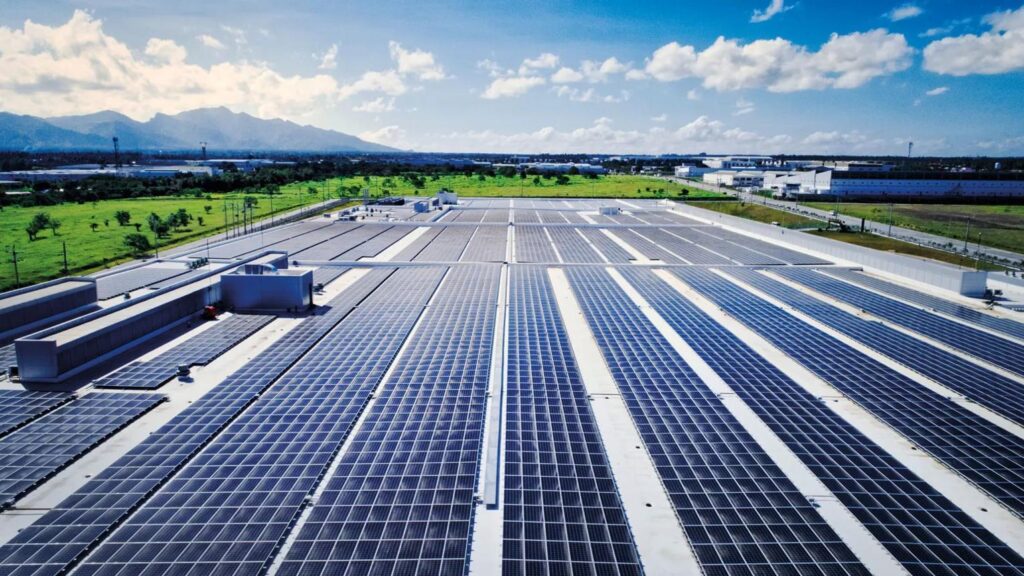
A solar-powered irrigation system uses photovoltaic panels to generate electricity for a water pump. The pump moves water from a source, such as a well, borehole, river intake, reservoir, or storage tank, to the location where it is needed.
Depending on the application, the system may include solar panels, a pump, a controller or variable frequency drive, electrical protection equipment, piping, valves, and water storage.
Some systems pump water directly when sufficient solar energy is available. Others use a storage tank or reservoir to hold water for later use. Battery storage may be included in particular designs, but it is not always necessary for solar water pumping.
In many agricultural applications, storing water can be a practical alternative to storing electricity in batteries. The most suitable approach depends on the pumping schedule, required flow rate, site conditions, and cost.
Why Consider Solar Irrigation in Ethiopia?
The suitability of solar irrigation varies by location, but several factors make it worth evaluating for agricultural operations.
1. Use of available sunlight
Solar panels generate electricity from sunlight, making them a potential power source for pumping during daylight hours. The amount of electricity available depends on sunlight conditions, array size, panel orientation, shading, temperature, and system design.
The pump’s operating schedule should therefore be matched to the expected solar production profile.
2. Reduced dependence on grid electricity
For farms without a convenient grid connection, a solar-powered pump may provide an alternative to extending electrical infrastructure, depending on the project’s size and location.
A proper assessment should compare the complete costs and requirements of the available options, including installation, distribution infrastructure, storage, and maintenance.
3. Potential reduction in fuel consumption
When a solar pump replaces some or all of the work previously performed by a fuel-powered pump, it may reduce the amount of fuel required for pumping.
The actual savings depend on the previous pumping method, water demand, solar system capacity, operating hours, maintenance, and any remaining backup energy requirements.
4. Support for remote agricultural operations
Solar pumping can be considered for agricultural sites where access to electricity or regular fuel delivery is difficult. However, remote installations still need a practical plan for equipment delivery, repairs, spare parts, and technical support.
5. Flexible water management
A well-planned solar pumping system can be combined with tanks or reservoirs to store water when solar production is available and distribute it according to irrigation needs.
This approach may allow water to be used in the early morning, evening, or other periods when the pump is not operating.
Understand the Water Requirement First
Before choosing a solar pump, determine how much water the farm requires.
Water demand varies according to crop type, planted area, soil conditions, irrigation method, climate, and crop growth stage. A small vegetable plot may have very different requirements from a large commercial farm.
The assessment should identify:
- The crops being grown.
- The area to be irrigated.
- The required daily water volume.
- The irrigation schedule.
- The water source and its seasonal availability.
- The location and elevation of the fields.
- The type of irrigation distribution system.
- Any water storage already available.
Daily water demand is often expressed in litres per day or cubic metres per day. One cubic metre equals 1,000 litres.
Knowing the daily requirement helps determine how much water must be pumped and how many hours the system can reasonably operate.
Calculate the Pumping Head
The pump must provide enough pressure to move water from its source to the delivery point. This requirement is described in terms of pumping head, usually measured in metres.
The total dynamic head includes more than the vertical distance between the water source and the outlet. It also accounts for losses caused by friction in pipes, bends, valves, filters, and other components, as well as the pressure required at the point of delivery.
For example, a pump lifting water from a deep borehole and delivering it through a long pipe to an elevated field may need to work against a much greater total head than a pump transferring water from a nearby surface source.
This affects pump selection, power demand, flow rate, and overall system sizing.
An accurate assessment should use the expected pumping water level rather than relying only on the total depth of a well. Water levels can change during pumping and across seasons.
Surface Pumps and Submersible Pumps
Two common pump categories are surface pumps and submersible pumps. They serve different applications and should be selected according to the water source and operating requirements.
Surface pumps
A surface pump is installed outside the water source and draws water through an inlet. It may be suitable for applications involving accessible water sources, tanks, reservoirs, or relatively shallow lifting conditions, subject to the pump’s suction limits and specifications.
The pump should be installed with appropriate protection against weather, flooding, and other environmental conditions.
Submersible pumps
A submersible pump operates while submerged in water. It is commonly used in boreholes and deep wells where the pump must lift water from below ground.
Selection depends on well dimensions, water level, required flow rate, total dynamic head, water quality, and the pump’s electrical characteristics.
For borehole installations, the pump must be compatible with the borehole diameter and installed according to the manufacturer’s requirements. Dry running, excessive sediment, and unsuitable operating conditions can damage equipment.
The correct choice is not simply the pump with the highest stated capacity. It is the pump that can deliver the required water volume at the required head under the available power conditions.
The Role of Solar Panels and Pump Controllers
Solar panels generate direct-current electricity. The available output varies throughout the day and with environmental conditions.
A solar pump controller or compatible drive manages the relationship between the solar array and the pump. Depending on the equipment, it may optimize power use, regulate operation, provide motor protection, and support features such as dry-run protection.
Some pumping applications use variable frequency drives designed for solar pumping. The selected device must be compatible with the motor type, voltage, current, power rating, and solar array configuration.
The solar array must provide suitable voltage and power across the expected operating range. Incorrect electrical sizing can prevent the pump from starting or operating as intended.
Electrical protection, grounding, cable selection, and installation practices should also be considered to protect people and equipment.
Should You Use a Water Tank or Batteries?
A key planning decision is how to manage the difference between solar production and water demand.
Water storage
A tank or reservoir stores pumped water. The pump can operate when sufficient solar power is available, while irrigation can continue from stored water during periods when pumping is reduced or unavailable.
Water storage may also provide a buffer for changing irrigation schedules, depending on tank capacity and the farm’s water requirements.
Battery storage
Batteries store electrical energy for use at another time. They can support applications that require pumping outside daylight hours, but they add equipment cost, conversion losses, maintenance considerations, and eventual replacement requirements.
For many irrigation projects, it is worth comparing the cost and practicality of water storage with those of battery storage before selecting a design.
The best option depends on the required pumping schedule, the type of irrigation system, site conditions, and the overall project budget.
Match the Pump to the Irrigation Method
The water delivery system influences the required flow rate and pressure.
Drip irrigation delivers water through emitters and usually requires controlled pressure and filtration appropriate to the water quality. Sprinkler irrigation may require higher operating pressure. Open-channel or tank-filling applications have different flow and pressure requirements.
A solar pumping system should therefore be selected as part of the complete water delivery arrangement rather than as an isolated piece of equipment.
The design should consider pipe diameter, pipe length, elevation changes, filters, valves, and the distribution system. These factors affect friction losses and the energy required to deliver water.
Where water quality is a concern, appropriate filtration and routine cleaning may be essential for reliable irrigation.
How to Estimate the Required Solar Pump Capacity
The sizing process begins with the required water volume and the total dynamic head.
For example, a farm that needs to pump a specific volume of water each day must select a pump capable of delivering that volume within the available operating window. The expected flow rate at the required head is more important than a pump’s maximum flow figure stated under different conditions.
The solar array must then be sized to provide sufficient energy under the expected sunlight conditions, accounting for system losses and seasonal variation.
The design should also consider periods of reduced sunlight and the consequences of delivering less water than required.
A professional assessment may use pump performance curves, solar resource data, the site’s water levels, and expected system losses to establish a suitable configuration.
Avoid choosing a pump or solar array based solely on the size of the farm. Two farms of similar area may have different water sources, elevations, crops, irrigation methods, and daily requirements.
Installation and Maintenance Considerations
The long-term performance of a solar irrigation system depends on installation quality and routine care.
Solar panels should be mounted securely in a location with appropriate sunlight exposure and minimal shading. Cables and electrical enclosures must be suitable for outdoor conditions. The pump, controller, and protection equipment should be installed according to their specifications.
Maintenance may include:
- Inspecting panels and mounting structures.
- Cleaning panels when dust or dirt significantly affects output.
- Checking electrical connections and cable condition.
- Monitoring pump performance and daily water delivery.
- Inspecting pipes, valves, filters, and leaks.
- Reviewing controller alarms and operating settings.
- Checking water levels and preventing dry running.
- Maintaining storage tanks and irrigation distribution equipment.
Electrical inspection and repairs should be handled by appropriately qualified personnel. Pump maintenance should follow the manufacturer’s instructions and site safety procedures.
Keeping records of pumping hours, water output, and equipment issues can help operators identify changes in performance.
Common Mistakes to Avoid
Several avoidable errors can reduce the effectiveness of a solar irrigation project.
Choosing a pump based only on flow rate: The required flow must be evaluated at the actual pumping head.
Ignoring seasonal water levels: Changes in borehole or surface-water conditions can affect pumping requirements.
Underestimating daily water demand: The system must be designed around the required irrigation volume and schedule.
Overlooking pipe losses: Long or undersized pipes can increase the total head and reduce delivered flow.
Ignoring water storage: A tank or reservoir may improve flexibility where pumping is concentrated during daylight hours.
Buying incompatible equipment: The panels, controller, motor, and pump must be electrically and mechanically compatible.
Neglecting maintenance: Dust, leaks, damaged wiring, clogged filters, and pump problems can affect the system’s performance.
Avoiding these issues starts with a complete assessment of the water source, farm requirements, and operating conditions.
Solar Irrigation Solutions From Zamra Electromechanical PLC
Solar-powered irrigation can be a useful option for agricultural projects when the water demand, pumping head, available sunlight, and equipment requirements are properly understood.
Zamra Electromechanical PLC focuses on solar energy solutions, solar pumping applications, and electrical equipment relevant to irrigation and other electromechanical projects.
Before requesting a solar irrigation solution, it is useful to prepare information about the water source, approximate pumping depth, required daily water volume, field elevation, irrigation method, and available installation space.
These details help establish the project’s technical requirements and support a more informed discussion about suitable pumps and solar equipment.
Conclusion
Solar-powered irrigation combines solar electricity generation with water pumping and distribution. Its suitability depends on the farm’s water needs, the available water source, pumping head, irrigation method, sunlight conditions, and the cost of alternative energy sources.
A well-designed system should provide the required water volume while accounting for seasonal changes, equipment compatibility, electrical protection, and maintenance.
For farmers, agricultural businesses, and irrigation project planners in Ethiopia, careful system planning is the foundation of a practical solar pumping investment.
Contact Zamra Electromechanical PLC
Company: Zamra Electromechanical PLC
Address: 150 metres before Megenagna 22 Roundabout, Addis Ababa, Ethiopia
Phone: +251 98 277 1897
Email: info@zamraelectromechanical.com
Additional email: birhanu@zamraelectromechanical.com
Website: https://zamraelectromechanical.com/
Contact Zamra to discuss solar irrigation systems, solar pumps, pumping equipment, and related electromechanical requirements.